
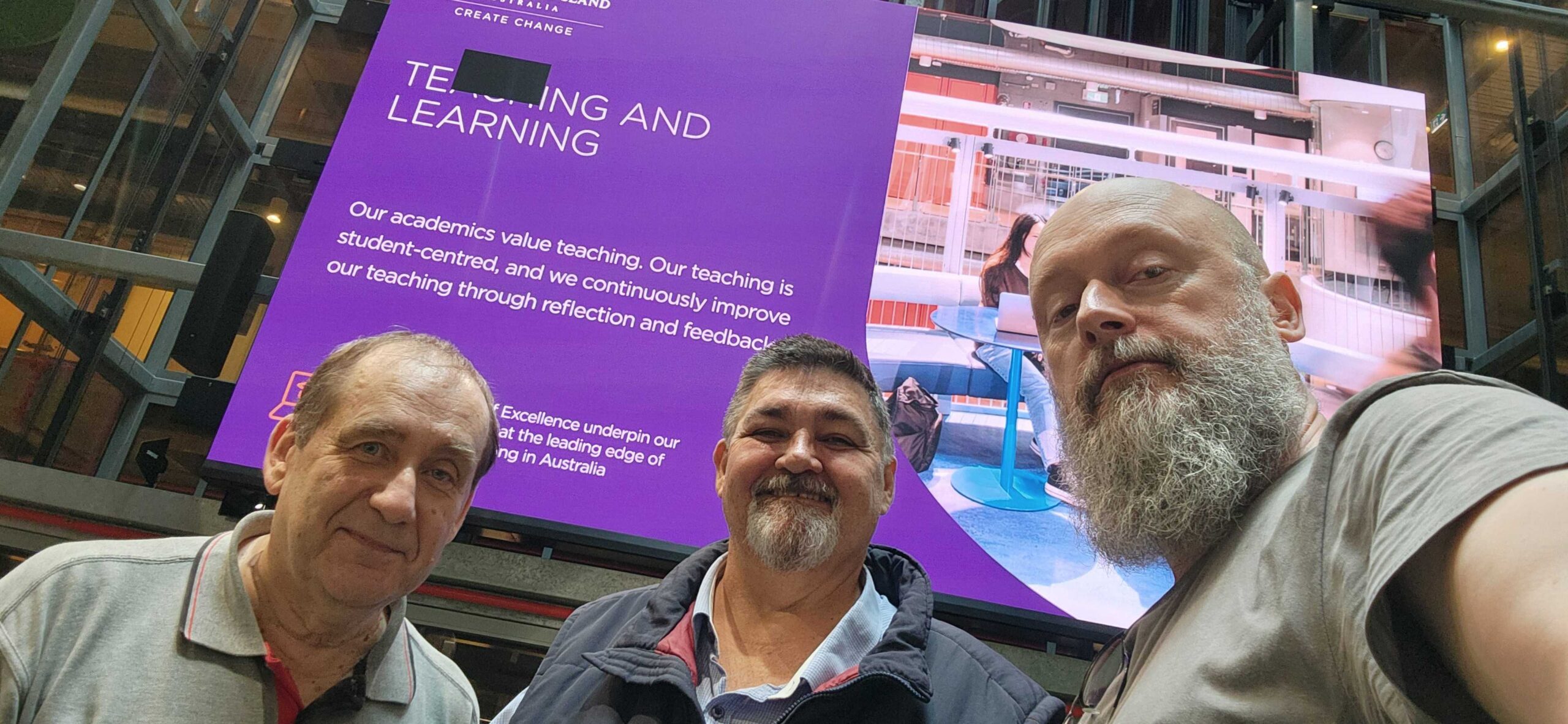
For three teams of multidisciplinary undergraduates at the University of Queensland it was a big day – it was their moment to present the outcomes of the projects they had been working on all semester. The project was of course the “Lightning Detector Network’.
Kindly invited by BDARS member Professor Adrian Panow VK4BCF, who facilitated the project, Martin VK4MCU, Paul VK4PLY and Bob VK4YA battled the morning traffic to attend the exhibition, arriving almost on time. There, they met with Adrian, along with the project supervisors and tutors. Unfortunately, David VK4ZF, who built many of the low-cost detector units, was unable to attend, although his significant contribution to the project was warmly acknowledged.

BDARS members may recall that the original Lightning Detector Project was a BDARS maker project, consisting of a low-cost system of local detectors situated at members’ QTHs and at BDARS facilities such as Mt Cotton. It’s still active today.
Following the initial meeting several months ago, and under the guidance of Professor Adrian, Director of the Energy Transition Research Network at UQ, the first outcome of those discussions was this project. As part of their DECO3801 capstone course, three teams of undergraduate students were tasked with investigating, categorising, and refining the existing stored lightning data, with the aim of improving detection capability.
We are pleased to report that all three teams demonstrated successful outcomes. Interestingly each had followed slightly different approaches, focusing on important areas of their choosing, but with the common goals.
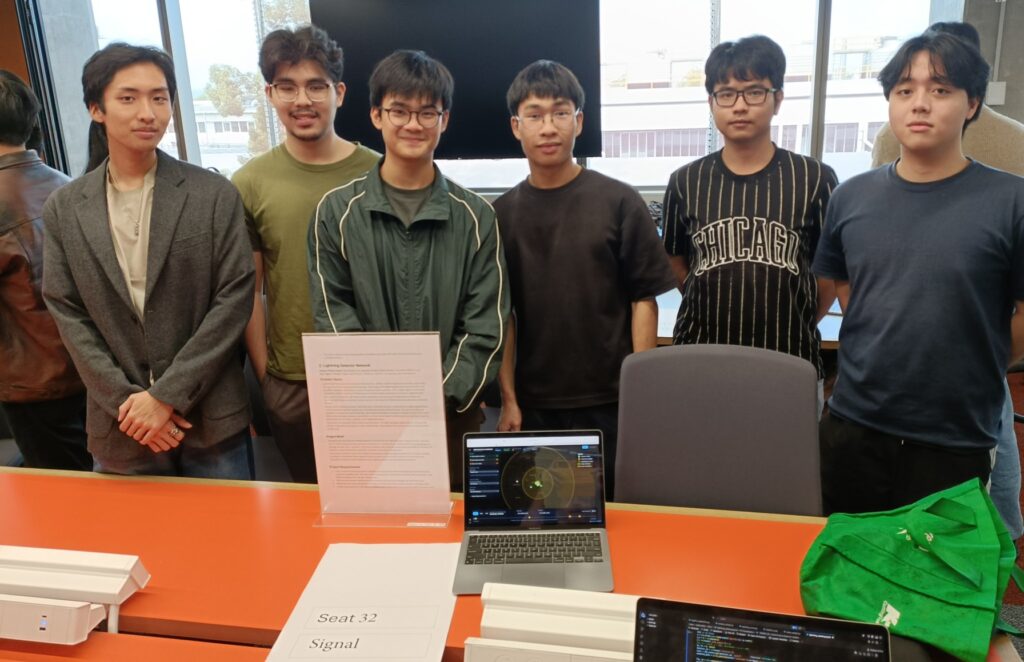
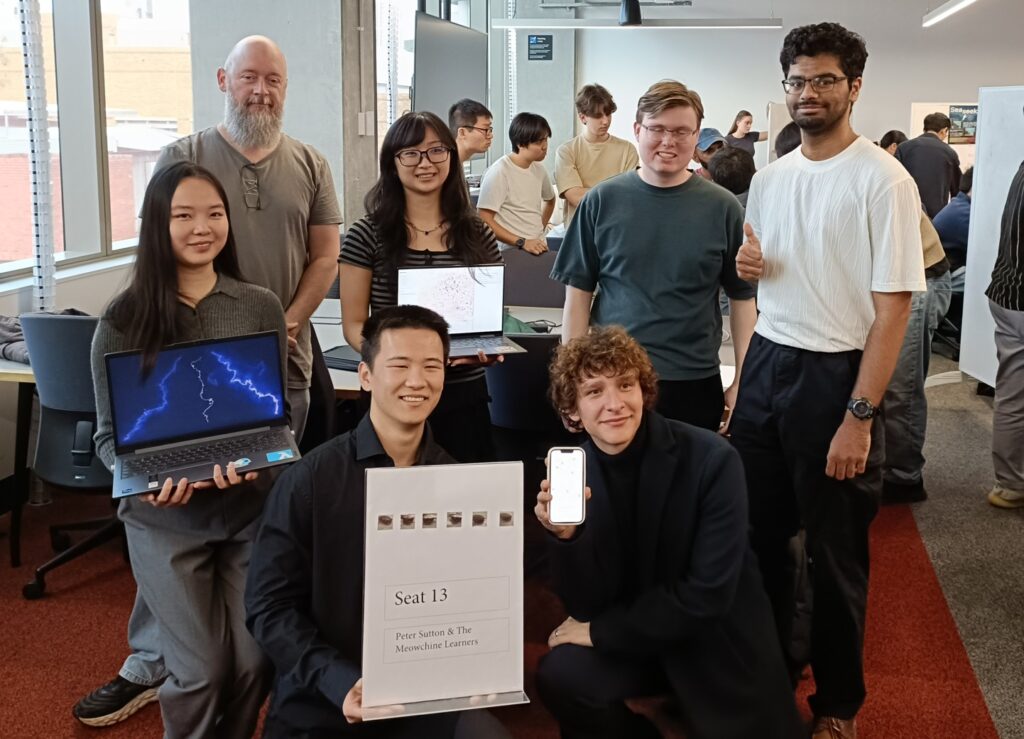
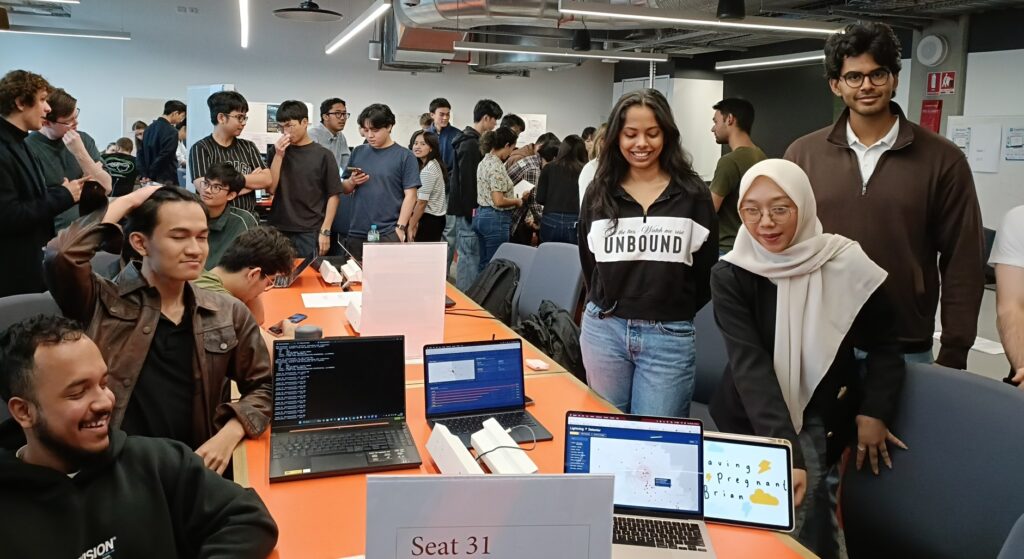
You might spot our elusive member Paul VK4PLY in one of those pictures!
All of the teams explored the use of Artificial Intelligence (Machine Learning) to help categorise the waveform signatures of lightning ground strikes, before turning their attention to the challenge of accurately determining strike locations. As raw data on its own is often not especially user-friendly, the teams also developed a range of innovative ways to present the information in a more useful and accessible form. One team even demonstrated a dedicated “Lightning App” for smartphones.
As one might expect from a group of enthusiastic undergraduates, each team chose its own name. If BDARS were awarding a prize for the most unusual, it would surely go to “Saving Pregnant Brian”! However, “Team Signal” and “Team Peter Sutton and the Machine Learners” also deserve honourable mentions.
As you may recall when the project was announced several months ago; this association with future engineers and scientists presents a valuable opportunity for BDARS to support the wider community. By engaging with a practical technical challenge and exploring the environmental factors that increasingly affect everyday life, the project highlights the value of collaboration between amateur radio enthusiasts, researchers, and students working together toward meaningful real-world outcomes.
The overall project is continuing to evolve and may, in time, prove valuable in helping to envisage a low-cost lightning detection system for developing countries or for protecting specific areas of critical infrastructure. Watch this space….

2 responses to “Striking Insights: Students, Scientists and BDARS”
•
This was sent to mr by an old friend who is an amateur radio ham.
When I was at U of Q 1956 -1960 the Electrical Engineering Dept was heavily involved in lightning research.
John Andrews BE Elec
•
Hi John, Thank you for your comment, and its good to hear UQ has been involved in the lightning research in the past and to know that BDARS is now a small help in its continuance! Bob VK4YA